

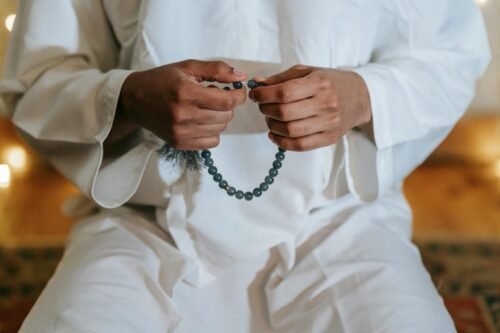
Why Dhikr Heals the Heart: A Practical Guide
In the fast-paced noise of modern life, the soul becomes dry, anxious, and restless. But Allah has given us a simple, beautiful, and powerful medicine: dhikr — the remembrance of Allah.
Dhikr is not just about words. It is about presence, connection, and restoration. The one who remembers Allah lives with light in the heart — even in darkness.
“Verily, in the remembrance of Allah do hearts find rest.”
(Qur’an 13:28)
1. What Is Dhikr?
Dhikr means remembrance. It includes repeating divine names, glorifying Allah, making duʿā’, reading Qur’an, or simply thinking of Him.
But the heart of dhikr is mindful presence with Allah — even if your lips are silent.
2. Why Dhikr Heals the Heart
- It calms anxiety by focusing the heart on the Eternal
- It purifies the soul from heedlessness and arrogance
- It brings joy to the heart, even in sadness
- It softens a hardened or distracted heart
- It builds a constant awareness of Allah in your day
Dhikr reconnects you to your true identity — a servant of the Most Merciful.
3. The Prophet ﷺ on Dhikr
The Messenger of Allah ﷺ said:
“The example of the one who remembers Allah and the one who does not is like the living and the dead.”
(Bukhārī)
And he said:
“Keep your tongue moist with the remembrance of Allah.”
(Tirmidhī)
Dhikr is life. It is oxygen for the soul.
4. What Are the Best Forms of Dhikr?
Some of the most powerful and beloved phrases include:
- Subḥān Allāh (Glory be to Allah)
- Al-ḥamdu lillāh (All praise is due to Allah)
- Lā ilāha illa Allāh (There is no god but Allah)
- Allāhu Akbar (Allah is the Greatest)
- Astaghfirullāh (I seek Allah’s forgiveness)
- Lā ḥawla wa lā quwwata illa billāh (There is no power or might except by Allah)
The Prophet ﷺ said:
“Whoever says ‘Subḥān Allāh wa bi ḥamdih’ 100 times a day, his sins will be forgiven even if they were as much as the foam of the sea.”
(Bukhārī)
5. Dhikr in Daily Life: How to Make It a Habit
- Begin your day with morning adhkār
- Use silent dhikr while walking, driving, cooking
- Repeat tasbīḥ after every prayer
- Pause in moments of stress, and just say “Lā ilāha illa Allāh”
- Use tasbīḥ apps or physical counters to track and motivate
- End your night with duʿā’ and remembrance
Start small. Be sincere. Allah loves consistency, even if it is little.
6. The Inner Secret of Dhikr
Dhikr reminds you that:
- You are not alone
- You are being watched by the Most Loving
- You have value, not from people, but from the One who created you
- Your worth is not in the world — it’s in your connection to Allah
Conclusion
Dhikr is not a ritual — it is a return. A return to clarity. A return to the heart. A return to Allah.
In a world that demands your attention and exhausts your soul, dhikr is how you breathe spiritually.
“Remember Me, and I will remember you.” (Qur’an 2:152)
What greater healing than to be remembered by the One who never forgets you?
Yes — while modern science doesn’t study “dhikr” in religious terms, many studies support its psychological and physiological effects:
- Slower heart rate & reduced anxiety:
Repetitive verbal meditative practices (like dhikr or mantras) activate the parasympathetic nervous system, reducing stress and improving heart rate variability. - Neuroscience & mindfulness:
A 2015 study in the Journal of Cognitive Enhancement showed that repetitive focused phrases reduce activity in the brain’s default mode network — the part linked to anxiety, overthinking, and self-centered rumination. - Spiritual coping:
In Islamic psychology research, studies show that dhikr strengthens resilience, improves emotional regulation, and enhances spiritual well-being.
In essence: Dhikr calms the body, centers the mind, and lifts the heart.
The Prophet ﷺ called it life for the heart — and now, science echoes that truth.
Even sincere worshippers experience this challenge. But the beauty of dhikr is that returning is also part of remembrance.
Here are tips to help:
✅ 1. Lower your pace
Don’t rush through tasbīḥ. Slow, intentional repetition allows the meaning to sink in
✅ 2. Reflect on the meaning
Say “Subḥān Allāh” and visualize the beauty of creation.
Say “Al-ḥamdu lillāh” and recall a recent blessing.
Meaning anchors attention.
✅ 3. Use your breath
Inhale gently as you begin, exhale as you complete. This helps ground the body and steady the mind.
✅ 4. Choose quiet moments
Early mornings, post-prayer, or quiet walks are ideal for focused dhikr.
✅ 5. When your mind wanders, return without guilt
Say inwardly: “This moment is for Allah.” Begin again, softly. Allah sees the effort.
“The best dhikr is that in which the heart is present.”
— Imam al-Ghazālī
Yes — listening to dhikr or Qur’an while doing daily tasks is not only allowed, but encouraged, especially when done with attentive respect.
It’s a beautiful way to:
- Fill your environment with the name of Allah
- Shift your mood from stress to serenity
- Stay spiritually grounded during busy moments
However:
- Avoid casual listening in noisy or disrespectful settings
- Don’t play it during sinful activities (e.g., gossip, heedlessness)
- When driving or walking, be conscious and attentive, not just passive
Even a little presence while listening can bring immense reward and healing.
Dhikr #SpiritualHealing #HeartOfTheBeliever #RememberAllah #DhikrIsLife #InnerPeace #IslamicMindfulness #HealingThroughFaith #SoulCare #MoistYourTongue