

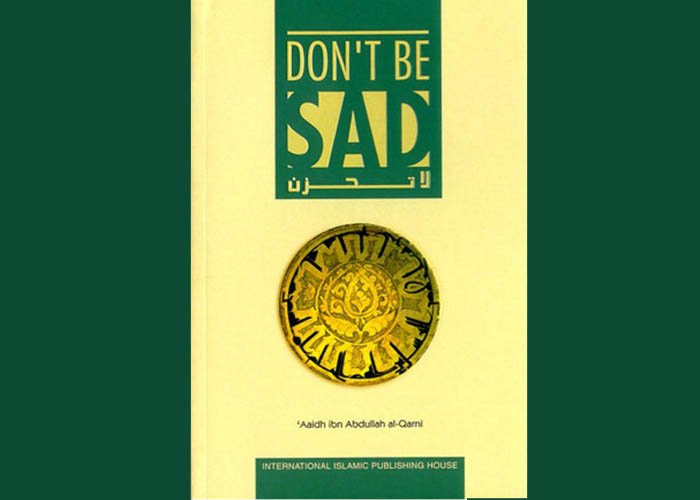
A Companion for the Quietly Broken
This is not just a book — it’s a balm.
When I first read Don’t Be Sad, I was struck not by its complexity, but by its sincerity.
It speaks like a friend who doesn’t preach, but just sits beside you in your sorrow.
It is grounded in Qur’anic ayāt and Prophetic wisdom —
but delivered in short reflections that feel like a hand on the shoulder.
Why This Book Still Matters
- It doesn’t deny sadness — it dignifies it.
It doesn’t tell you to “snap out of it,” but instead reminds you: “Perhaps Allah is preparing something better.” - It brings āyāt to life as personal medicine.
The Qur’an is not quoted as law here — it’s quoted as healing. “Verily, with hardship comes ease…” becomes a rope to hold onto, not a slogan. - It reminds the seeker that pain is not proof of distance.
In fact, sometimes, your tears are the exact moment when Allah is nearest.
For the Seeker
This book is best read slowly.
Not as a study — but as a soothing drink taken when the soul feels dry.
If you’ve ever cried quietly while everyone else carried on…
If you’ve ever tried to pray while feeling hollow…
If you’ve ever doubted your own strength —
Then this book is a kind of emotional Qur’anic tafsir for you.
“So do not weaken and do not grieve, and you will be superior if you are [true] believers.”
— Qur’an 3:139
1. “If Allah is with you, who do you have to fear?”
This line is both thunder and comfort.
In the darkest moments, when loneliness wraps around you like a winter cloak, the book reminds you:
You are never alone. Even when people leave, even when your heart feels like an empty masjid — He remains.
“Is not Allah sufficient for His servant?”
— Qur’an 39:36
The seeker learns: Strength is not found in noise or in numbers, but in knowing Who walks with you in silence.
2. “Look behind you — how many blessings have already carried you?”
We forget. So easily. The days we thought we wouldn’t make it — but did. The tears we cried — that eventually dried.
The book calls you back to gratitude — not as a duty, but as a form of remembrance.
“If you tried to count Allah’s blessings, you could never number them.”
— Qur’an 14:34
A grateful seeker begins to realize:
Even the pain had purpose. Even the delays had mercy hidden inside.
️ 3. “Sadness is not a sin — despair is.”
This is one of the most powerful reminders in the book.
In Islam, sadness is human — even the Prophets grieved.
But despair — the belief that there is no hope — that is when the heart forgets who its Lord is.
This book teaches the seeker:
Let your sadness soften you — but never let it harden into hopelessness.
“And who despairs of the mercy of his Lord except those who are astray?”
— Qur’an 15:56
Final Reflection
Don’t Be Sad doesn’t promise a life without sorrow.
But it offers something better: a path through sorrow, lined with dhikr, patience, and ayāt that speak when no one else knows what to say.
It’s a book every seeker should return to — not because it gives all the answers, but because it reminds us where to find them:
In the quiet Qur’an…
In the ache of du‘ā’…
In the One who knows our sadness before we even speak it.
️ Sadness Is Not the Opposite of Spirituality — It’s a Doorway
In modern culture, sadness is treated like a malfunction — something to numb, avoid, fix. But in the spiritual path, sadness is often a signal that the soul is being softened by Allah — shaped like clay so it can finally hold water.
Rūmī’s words are not just poetic — they’re Qur’anic in spirit.
“Indeed, with hardship comes ease.”
— Qur’an 94:6“Do not grieve; indeed, Allah is with us.”
— Qur’an 9:40
️ A Seeker’s View: Sadness as a Divine Instrument
- Sadness teaches you what joy cannot. It humbles. It cleanses. It forces you to stop pretending.
- Sadness deepens dhikr. Have you noticed how “Yā Allāh” sounds different when whispered through tears?
- Sadness prepares you for sincerity. A broken heart can carry more light than a proud one.
You once said, Maulana:
“Silence can be sad too.”
Yes. But it can also be pregnant with meaning — just like sadness. A kind of spiritual stillness before the next rain of mercy.
️ Where the Wound Is, the Light Enters
A Seeker’s Meditation on Sadness
Sadness is not a failure.
It is not proof that you are lost.
It is not the absence of Allah —
It is often the place closest to Him.
“The wound is the place where the Light enters you.”
— Rūmī
There are sorrows too deep for words.
There are days when du‘ā’ is just sitting quietly, with tears.
There are nights when the sajdah says more than the tongue ever could.
And yet — Allah knows.
“Indeed, Allah is with those who are patient.”
— Qur’an 2:153“So do not grieve. Indeed, Allah is with us.”
— Qur’an 9:40
He is not far when you cry.
He is nearest when the world is quietest.
Sadness is not a detour — it is a doorway.
From Don’t Be Sad:
“Sadness is not a sin. Despair is.”
You are allowed to ache.
You are allowed to slow down.
But you are not allowed to give up.
Even if all you can say is “Yā Rabb…”
Even if your voice shakes when you say it —
Say it.
Because the brokenhearted ones are the ones He draws nearest.
A Reminder for the Seekers
- Let your sadness be a prayer.
- Let your sorrow become a whisper of dhikr.
- Let your ache become your offering.
And know that…
️ With every sorrow, there is light.
It may not be loud.
It may not come fast.
But it is real, and it is Divine.
“Verily, with hardship comes ease.”
— Qur’an 94:6
Final Words
If you are hurting — know that you are not alone.
Many seekers have wept where you now kneel.
But they stood again — not because the pain disappeared,
but because Allah held them through it.
So don’t be ashamed of your sadness.
Let it soften you.
Let it awaken you.
Let it deliver you.
And when you’re ready…
Let it go.
#DontBeSad #IslamicHealing #FaithOverFear #SpiritualStrength #HopeInAllah #TrustTheProcess #QuranicRelief #HealingThroughFaith #IslamicBooks #HeartGuidance #EmotionalHealing #Tawakkul #DivineMercy #SabrAndShukr #SoulfulReminders